Mousetronaut: Based on a (Partially) True Story by Mark Kelly
The sweetest little picture book, about Meteor the Mouse, one of a rodent team of, uh, mission specialists on board a space shuttle mission who saves the day. At the end Kelly includes an afterword with a brief history of NASA and lots of fun details about travel in space.
During my first flight in 2001, there were eighteen mice on board. All of them, with one exception, clung to inside of the mesh during the entire mission. One mouse, smaller than the rest, seemed to enjoy the experience and effortlessly floated around the cage. The story of Mousetronaut is inspired by that mission. We all watched him as he enjoyed the feeling of being weighless. I started to think about that mouse and what it would be like to have him as part of our crew.
The illustrations are just marvelous (lovelovelove the one of Meteor squeezing in between the control panels to get the key, and the one of him in his space suit), and you know the details are right. Any kid of any age will enjoy this book, and more importantly, no adult will be bored with having to read it 9 times in a row to his kid.
# Permanent link to One mouse, smaller than the rest…
[from the stabenow.com vaults, July 5, 2010]
So I'm sitting here bawling because John Adams just died. It doesn't seem to matter that it happened 182 years ago.
The best biographers understand that a biography is not only a history of the title subject but a time machine to the time in which he or she lived. Having read David McCullough's John Adams, I now feel like I was in the room when John (look at that, we're on a first-name basis) rose in Congress to speak in support of the Declaration of Independence, like I was sitting at Abigail's elbow when she wrote to him wherever he was, Philadelphia, Paris, Amsterdam, London. There are so many great word pictures, like the one of John helping to repel boarders when his ship came under attack crossing the Atlantic, told this time in the words of the ship's captain.
And Abigail. Has there ever been such a woman? Has there ever been such a partnership? It's almost enough to make me believe in marriage.
Of course it helps that John and Abigail both were such indefatigable correspondents (they weren't happy that they were so many times separated but we sure lucked out) and such amazingly good writers. The quality of their writing, as well as that of their multitude of other correspondents is certain to leave you wondering where the hell that ability went.
McCullough's organizational skills in plucking just the right phrase from just the right letter are astonishing, and his own prose doesn't suffer by comparison, either. A glorious, you-are-there book.
# Permanent link to John Adams just died, dammit.
[from the stabenow.com vaults, 8/23/2010]
Patrick at Mysterious Galaxy in San Diego is my connection for good fantasy and good science fiction. (He posts reviews here.) This year he got me hooked on military sf, space operas, the kind of novels that span light years as well as decades, where fates of galactic empires hang in the balance and it all comes down to the decisions of one man or woman in the captain's chair of a space carrier facing impossible odds. The battles rage up and down solar systems and in and out of hyperspace and even if you're a card-carrying pacifiist you can't help but thrill to the might and majesty of it all.
In Jack Campbell's
Lost Fleet series beginning with Dauntless, a war has been raging between the Syndic and the Alliance for more than a century, and in a perfidious bit of treachery the Syndic has killed the Alliance fleet's combat officers. Ah, but then the Alliance rescues Captain Black Jack Geary from the cryopod he's been adrift in ever since the last battle he fought a hundred years before. Since, after they wake him up, he's the most senior officer in the fleet, he takes command, and over six novels leads the lost Alliance fleet home.
John Scalzi's Old Man's War is the direct descendant of Robert A. Heinlein's Starship Troopers and Joe Haldeman's The Forever War. At age 75 John Perry leaves earth to join the Colonial Defense Force. In return for a new young body, one specially upgraded for battle, John and his peers will fight the alien races who are in competition with the CDF for new planets to colonize. John's got a smart mouth and a grunt's-eye view and he is very good company through a plot that just keeps throwing new stuff at you, and then throws some more. A must read.
Right now I'm tearing through David Weber's Honor Harrington series like a dreadnought through n-space. Think Horatio Hornblower with Pip for a pet. In On Basilisk Station, the first of this now 12-novel series, Captain Honor Harrington, Royal Manticore Navy, and her ship Fearless are assigned to picket the galactic transfer port Basilisk. Smart, principled, courageous, the aptly-named Honor cleans up the mess left behind by the last captain, including but not limited to a planetary insurrection and an enemy invasion. The characters are great, the plots brobdingnagian, but the detail of the setting is these novels' greatest strength. You feel like you're one of Honor's crew and you will both cheer and cower during the battle scenes.
Addendum on June 24, 2013:
And THEN I discovered Tanya Huff's Valor series all by myself. Confederation Space Marine Master Sergeant Torin Kerr battles her way across the galaxy, in spite of a novel-to-novel realization that the war the Confederation is fighting is not anything like it seems. I won't spoil it, but these books, five so far and I hope there will be more, are funny, smart, and real enough to smell the powder. You get the feeling that real marines talk and act and fight just like this (okay, absent the aliens), and the books might just give you the warm fuzzies that people like Torin stand between us and threat every day.
# Permanent link to Military SF

[from the stabenow.com vaults, 3/15/2010]
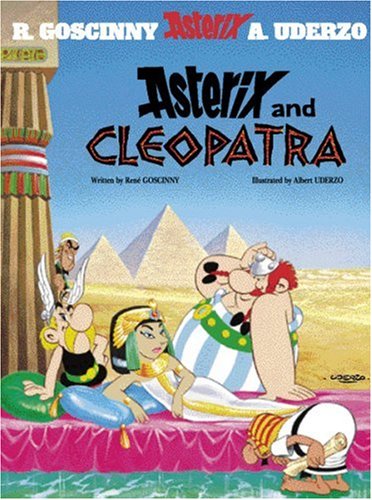
Friends in Ireland introduced me to the adventures of Asterix and Obelix, who, thanks to the magic potion of the resident druid, Getafix and with the help of canine companion, Dogmatix (and in spite of resident bard Cacofonix) triumphantly defend the borders of their village against Caesar’s legions, to the legions’ great dismay (“I hate those Gauls.”).
My personal favorite is Asterix and Cleopatra where they travel to Egypt to help Getafix’s buddy Edifis win an architectural contest between Ceasar and Cleopatra. There are of course pirates on the voyage, and when they get to Alexandria the Egyptians speak in hieroglyphics, but no worries, there are subtitles.
Oh, and the Sphinx’s nose? Obelix did that.
Second favorite? Maybe Asterix in Spain, where Asterix and Obelix rescue the urchin Pepe, son and heir of Chief Huevos y Bacon of Hispania from those dread Romans Raucus Hallelujachorus and Spurious Brontosaurus. Asterix is thrown to the aurochs but is saved by an opportunely-dropped red cloak belonging to the half-sister of Julius Caesar's cousin by marriage, and there is of course a pleasant voyage (except for that little problem with the pirates) and the traditional homecoming feast.
This graphic novel series has everything, great storytelling, superb drawing, awful puns, and wonderful sound effects. Yes, really. My personal favorite is "PAF!" whenever Asterix clobbers somebody into orbit. I also love the "TANTANTARA!" every time Cleopatra arrives on her gigantic, solid gold, uh, vehicle.
And sneakily? Insidiously? While you’re laughing, you’re learning.
# Permanent link to Oh, and the Sphinx’s nose? Obelix did that.

[from the stabenow.com vaults, 3/29/2010]
I went to Philadelphia a few years ago and saw Independence Hall, the Liberty Bell, and City Tavern where Paul Revere came galloping up with news of the British blockade of Boston. When I got home again, the first book I reached for was James Thomas Flexner’s Washington: The Indispensable Man.
Any good biography is not only a portrait of the subject, it is a doorway that opens into a place and a time, and Flexner’s book is rich with this kind of detail.
“The “Wild West” was then on the Atlantic seacoast,” he writes of Virginia in 1675, the year the first Washington came to America.
There, that gives you a little perspective on the time.How about this: “In 1768, Washington went to church on fifteen days, mostly when away from home, and hunted foxes on forty-nine…He attended three balls, two plays, and one horse race…He visited a lioness and a tiger, and gave nine shillings to a showman who brought up an elk up the long driveway to Mount Vernon.” I feel like I know the father of our country a little better now, don’t you?
Flexner has an able pen, and at times an enjoyably acid one, too, as in this portrait of General Charles Lee: “He was tall and emaciated, dirty of clothes and body, voluble, foulmouthed, seemingly brilliant, best characterized by his Indian name, “Boiling Water.” He felt that he was making perhaps too great a sacrifice in agreeing to be commanded by the amateur Washington.”
“As always,” Flexner writes, after Yorktown, “when the British were in trouble, patriots came flocking [to Washington’s army]…”
Of French Minister Edmond Charles Genet, he writes “Jefferson now tried to tone the Frenchman down, but it was like arguing with a tornado.”
Jefferson, Munro, Adams, Franklin, all the usual suspects are of course present in this narrative. But it is Flexner’s contention that only Washington could have led the Continental Army to victory, and only Washington who could have led the nation during those first shaky years of the first government ever of laws and not of men. He’ll make a believer out of you.
# Permanent link to “Jefferson now tried to tone the Frenchman down, but it was like arguing with a tornado.”
[from the stabenow.com vaults, 7/12/10, and in honor of the publication of the last Sookie Stackhouse novel tomorrow, Dead Ever After.]
An awful lot of books with vampires in them out there nowadays, I agree, but before you roll your eyes and groan let me steer you to some really good ones.
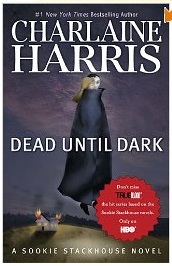
Sookie Stackhouse's clairvoyance made her an outcast long before she started dating Bill the vampire. Sookie tends bar in present-day Bon Temps, Louisiana, where due to the invention of synthetic blood by the Japanese the vampires have decided to come out of their underworld closet, and that's just the beginning. Over so far ten books in the series, Sookie is introduced to vampires, werewolves, werepanthers, weretigers, witches, fairies, maenads, and she takes them all in her stride. Beautiful, spunky, brave, Sookie is the calm eye of the supernatural hurricane swirling around her, and standing at her shoulder as she leans into this paranormal wind makes this world seem all the more real. Yes, this is the series that HBO's True Blood is based on, but read Charlaine Harris's books, too, because they're a lot of fun.
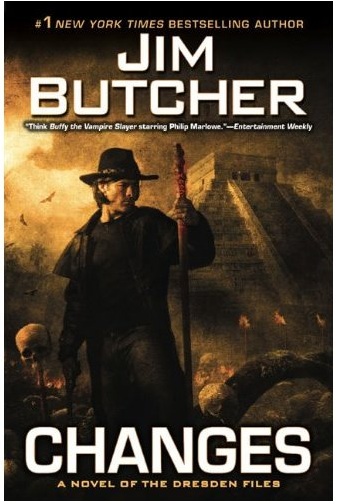
Harry Dresden is a wizard living in present-day Chicago, where he advertises his services under "W" in the Yellow Pages. He's got a good heart, a smart mouth, and a skull for a sidekick, and he goes up against some of the Biggest Bads ever to scare the socks off you. Among these are the vampires, organized into the Black Court, the White Court and the Red Court. The twelfth book in Jim Butcher's series, Changes, features a finale smackdown with the Red Court that will have you on the edge of your seat, and the best hook I've seen set in the denouement of a work of popular fiction in a long, long time.
A new entry into the vampire oeuvre is Blood Oath, the first book in a planned series by Christopher Farnsworth about a 163-year old vampire who under a voluntary voodoo spell (work with me here) has been working as a secret agent for the presidents of the United States since Andrew Johnson, and who sublimates his lust for blood by going to AA meetings, whenever he can fit one in between fouling dastardly assassination plots by zombie Frankenstein soldiers. His sidekick and our way into this world is the ambitious and cynical Zach Burrows, a young White House staffer caught in flagrante delicto with the president's daughter, which explains his current assignment. A promising start for a buddy series.
# Permanent link to Sookie is the calm eye of this supernatural hurricane.
And let's not forget the book that started it all, Bram Stoker's Dracula. I read it a long time ago but I remember wondering even then how Stoker in 1897 got away with all that unspoken but nevertheless smoldering sexuality that underlays every line of the text. And Renfield still gives me the creeps.
The Reversal by Michael Connelly
It usually was the best moment of a case. The drive downtown with a suspect handcuffed in the backseat. There was nothing better. Sure there was the eventual payoff of a conviction down the line. Being in the courtroom when the verdict is read--watching the reality shock and then deaden the eyes of the convicted. But the drive in was always better, more immediate and personal. It was always the moment Bosch savored. The chase was over and the case was about to morph from the relentless momentum of the investigation to the measured pace of the prosecution.
This is why we read Connelly, this kind of observation that gives us the sense that we're a part of the murder investigation Harry Bosch is currently on. Of course, you'll notice the word "usually" in the first sentence, which all by itself tells us that all the rules are about to be broken.
Twenty-four years before, Jason Jessup was convicted of kidnapping and murdering a little girl. New DNA techniques have caused the courts to throw that conviction out and to bring him to trial again. Because of suspicions of conflict of interest in the Los Angeles DA's office, the DA names defense attorney Mickey Haller as special prosecutor. Mickey picks his ex-wife Maggie McPherson (aka Maggie McFierce, love that nickname) as his co-chair and his half-brother Harry Bosche as lead investigator. The fact that the three of them share two daughters adds a serious degree of personal urgency to the investigation and make it a seriously family affair.
Good plotting, good characters, a villain who should never be taken at face value, and courtroom scenes like this one
"I want jury selection completed by the end of the day Friday. If you slow me down, then I will slow you down. I will hold the panel and every lawyer in here until Friday night if I have to. I want opening statements first thing Monday. Any objection to that?"
Both sides seemed properly cowed by the judge.
make The Reversal a fun read.
# Permanent link to “Both sides seemed properly cowed by the judge.”
Third in the saga of teleport David, his wife Milly, and now their daughter Cent. Steven Gould is the direct descendant of Robert A. Heinlein and Joe Haldeman--he writes so sensibly and practically of impossible things that he makes you believe, well, the impossible. He's really given serious, extended thought in these novels (Jumper, Reflex) to just what it would be like to be able to teleport, and to just how attractive that would make you to the powers that be. If you live in daily fear of being kidnapped by forces determined to exploit your ability, what do you do with your life? How do you stay out of their reach? Do you decide to try to do good in the world anyway, at the risk of losing your freedom and self-determination? How do you raise a child in this world to be aware and responsible? (FYI, Milly and David do a pretty good job.)
I read Impulse in one sitting. Watching Cent, a very atypical rebellious teenager, learning to cope with her world's privileges and its dangers and even to extend its boundaries is riveting stuff. Cent is a marvelous addition to this world and is now my favorite character in it. I hope we get to go there again.
# Permanent link to What would life be like if you could teleport?

Make the Bread, Buy the Butter: What You Should and Shouldn't Cook from Scratch -- Over 120 Recipes for the Best Homemade Foods by Jennifer Reese
A few caveats before we get started, Reese writes in the introduction. First, although, like most people, I think about money, I've always been able to clothe my children and pay the mortgage and if I couldn't whether I bought or made creme fraiche--or bread, to use a less absurd example--would make no difference. It is frivolous and deluded to think it would. I just wanted to address and answer some middle-class home economics questions that nagged my Michael Pollan-reading, price-checking, overthinking self. This is not a book about how to scrape by on a budget and it is not a book about how to go off the grid.
Well, thank god for that. I, too, read The Omnivore's Dilemma and when I finished it I said out loud, "Well, what the hell can I eat then?"
Here instead is an examination of the art of the possible in the kitchen, with recipes graded by three scales: Make it or buy it?, Hassle, and Cost comparison. She starts with peanut butter (Make it or buy it?: Make it.) and goes on to truffles (Hassle: Actucally, yes. These are a hassle.) to mozzarella (Cost comparison: If you have a good source for the proper milk (like a couple of goats) this is a bargain...).
Smart and funny, and worth reading for the chapter on raising chickens alone. I'm going to try her bread recipe.
# Permanent link to The Art of the Possible in the Kitchen
For Darkness Shows the Stars by Diana Peterfreund
Part dystopian future, part teenage love story, part philosophical debate on whether a man's reach should or should not exceed his grasp and what either might mean to the larger community of mankind (but don't let that scare you), told through a clever replotting of Jane Austen's Persuasion.
Well into a post-apocalyptic future Earth history, Luddite Elliot refuses to run away with Post Kai, choosing to sacrifice her own happiness to ensure the survival of the Reduced workers on her family estate. Four years later Kai returns triumphant, rich and successful beyond their wildest youthful dreams. Elliot still loves him, he appears to hate her, and his intelligent, able Post companions only emphasize the differences between his life and hers, spent everlastingly cleaning up after her spoiled sister, her cruel father and her wicked cousin.
Horror and Jane don't pass the smell test for me, but science fiction and Jane sure did. I especially enjoyed that Anne -- sorry, Elliot -- got to have a job and to do it well.
Note: My book club is going to be reading and discussing this book together with Austen's Persuasion later this year.
# Permanent link to Part dystopian future, part teenage love story, all Jane Austen