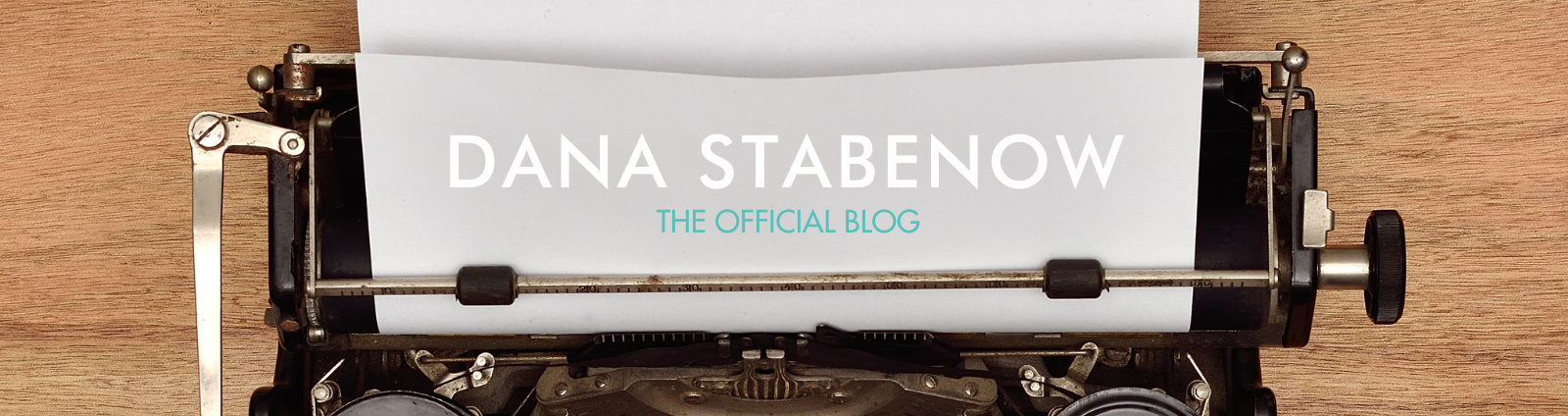
I didn't think Jim Butcher could write a better Harry Dresden book than Dead Beat. Boy, was I wrong.
Big. Fat. Spoiler. Alert. Don't read any more until you've read the book.
If I may speak of this from a personal perspective, I have done the same thing with the Kate Shugak series that Jim Butcher has now done in Changes. I took her job away, albeit off stage, I killed her lover, I burned down her house. But in Changes Butcher does it all in one book, in 438 pages he strips Harry to the bone, divesting him of every possession, including his own soul. And then on the last page, he kills him.Except the oncoming train tells me he hasn't. And also because I went hotfoot to his website to be reassured that Butcher is still saying there are twenty books in the series and this is only number 12.
My heart failed me too many times to mention, in steadily increasing palpitations. When Harry's office exploded, not so much, he hadn't been there in a while. When the Blue Beetle got squished beyond all hope of resurrection. When his house burned down and took his lab with it. When he broke his back. When he slaughtered the Winter Knight, I actually cried out "No, Harry, no!" What will Mab do to him? It's all very well for Ebenezer (Harry's grandfather! It all makes so much more sense now! Jesus, how far ahead does Butcher plot out these novels?) to say that Harry will always be able to choose, but Harry sold himself to Mab in exchange for healing and power, and he killed, deliberately, to get them. That's a bill I'm not sure he can pay.
When Butters got shot.
And then Harry kills Susan, the one woman he has ever loved, to save their daughter and put an end to the Red Court.
He gives Harry a daughter, and then he takes her away.
And then that horrible, wonderful bait-and-switch with Karrin at the end.
Wow.
There are so many great, great scenes, but let me just single out a few.
The Grey Council arriving in the nick of time, when we finally get to see Blackstaff at work. "I got another one."
Karrin with Fidelacchius.
The great rif on the Fellowship of the Ring. (I will say I knew Martin was the rift within the lute, he was too impervious to injury. I did not see coming what the soul gaze he exchanges with Harry at the end reveals. But of course it fits, perfectly.)
The best part of this book is that Butcher waited this long to write it, to give us 11 previous chapters in Harry's life, giving us that much lead time to become completely invested in his character. We feel every hit Harry takes like it's aimed at us personally.
Incredibly well done, and leaving the reader wondering how the hell Harry's going to come back from this, and if he'll still be our Harry when he does. What a great place to leave us. Bravo!!
# Permanent link to Jim Butcher’s Changes
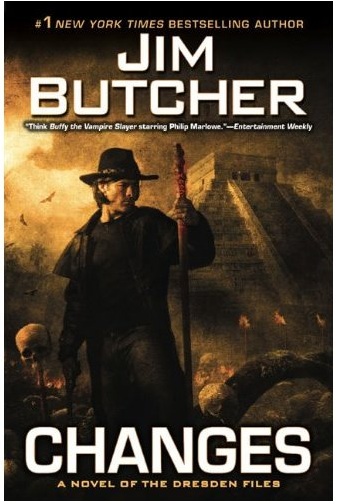
I’m not a soldier, I’m not a politician, so the best I can do when we go to war is read about it. Lately that’s been Charlie Wilson’s War by George Crile, The Dark Side by Jane Mayer, and The Forever War by Dexter Filkins.
Charlie Wilson’s War I can best describe as a tale of Robin Hood and his merry men, a bunch of Washington D.C. true believers who never got over the Vietnam War, robbing the federal government to give to what they called the Afghan freedom fighters virtually unlimited funds and war materiel to boot the Soviet’s invading army back across their own border. It is a very entertaining read, it’s well written and incredibly well researched, but reading now what happened then through the prism of current events, I’m left with a feeling of incredulity at the display of hubris on the part of Charlie and his merry men. I have also lost any faith I ever had in the oversight capability of Congress.
A much darker read is Jane Mayer’s The Dark Side, a painstaking and just amazingly detailed account of how extreme rendition (in English, kidnapping) and extreme interrogation (in English, torture) came to be public policy in the current administration. I can't say you'll enjoy reading this book, but it's a book that should be read, at the very least as a cautionary tale as to just how far things can go wrong when nobody's watching. It is reassuring to report that there are heroes, like David Brant, the head of NCIS, Alberto Mora, Counsel to the US Navy, the FBI agents who refused to have anything to do with the torture, and all those administration attorneys who, while they were hired because they had the correct conservative credentials nevertheless knew that kidnapping and torture are wrong, unconstitutional and unAmerican, and who fought the good fight against this program, some of them from the beginning, and some of whom were fired or forced to quit because of it.
# Permanent link to Charlie Wilson’s War
The Forever War was written by Dexter Filkins, a New York Times reporter who has been on the ground in Afghanistan and in Iraq from the beginning, and whose prose never once gets in the way of the story he tells. Listen to this: “Sometimes I would walk into the newsroom that we had set up in the New York Times bureau in Baghdad, and I’d find our Iraqi employees gathered round the television watching a torture video. You could buy them in the bazaars in Baghdad; they were left over from Saddam’s time.” This book is as close to Iraq as you can get without being shot at, and that's okay with me.


Hard to believe, but T. Jefferson Parker just wrote a book better than Silent Joe. I hate him so much.
Iron River is the third in Parker's Charlie Hood series, which began with L.A. Outlaws and continued with The Renegades. One of the things I like about Jeff's Charlie Hood novels is that he lets Charlie have a past. I like a series that doesn't dismiss what came before, where the characters remember their own history. I do, why shouldn't they? And even if he did kill off my favorite character in the very first book, I'm willing to forgive Jeff anything for the recurring totem of this series, which is, believe me or believe me not, the actual head of Mexican American heartless killer or Robin Hood (pick one) Joaquin Murietta, which floats in a large, liquid-filled glass jar and is handed down to Murietta descendants, who appear as major characters in the Hood novels.
Iron River is about an almost biblical battle between beleaguered US law enforcement agents and seemingly invulnerable and unstoppable Mexican drug lords, with two actual battle scenes that will have you on the edge of your seat. The first one occurs early on, California/ATF cops against drug dealers, at night, across the border in a Mexican countryside where they have to watch out for rattlesnakes as they're sneaking up on the hacienda while trying not to be skewered on the cactus. The bad guys have flame throwers. No lie. Later on there is a scene where our heroes ride into a village that is reminiscent of one of the early Man With No Name films. (In my imagination Charlie's starting to look a little like Clint Eastwood.)
Later, Parker carries on the good-vs.-evil theme when Charlie has a close encounter with someone who may be the devil (I'm sure he is, but Charlie is unconvinced.). The devil even has a handmaiden. Later still, I was horrified when I realized I wanted the gunsmith to get away, just another example of Parker's great characterization: I'm rooting for all the wrong people. That will pull you up with a jolt.
Great characterization, epic plot and as always that wonderful Parker ability to put you right down in the southern California countryside, recoiling from the cholla spines. Jeff never fails to remind me how glad I am to live in Alaska. I'll take a grizzly bear over a rattlesnake any day.
# Permanent link to T. Jefferson Parker’s Iron River
