I don't much like reading books about time travel. Mostly it just makes me dizzy, I don't deal well with paradoxes. I loved the scene at the end of the new Star Trek film when Spock I and Spock II do the Vulcan equivalent of snicker over Kirk's gullibility as to the dangers of time travel paradoxes.
[youtube http://www.youtube.com/watch?v=iqXd6haFYqU&fs=1&hl=en_US]
There are a few exceptions, like Lest Darkness Fall by L. Sprague de Camp and Time and Again by Jack Finney. John Varley's Millennium is another that has taken up permanent occupancy on my bookshelves, and I've been puzzling over why.
I think it's because the premise for time travel in this novel is practical. The future is robbing/mining/harvesting/exploiting the past to save the future, to ensure the survival of humankind. It isn't a bolt of lightning or a self-induced hypnotic state, no, this time the future creates a time travel machine specifically for this purpose and none other.
The motivation is great on a character level, too. Louise and the rest of her Snatch Team are sacrificing their own lives for the sake of the rest of the human race, and FAA investigator Bill Smith's job and personal curiosity, not to mention his love for Louise, pushes him inexorably toward solving this mystery.
One of the best robot characters ever created in SF, and in the best self-referential science fiction tradition each chapter heading is a shout-out to that which has gone before, including on page 23 one to Robert Heinlein. I'm definitely feeling the love.
In fact, time to reread it again...
(The film version of Millenium, with Cheryl Ladd and Kris Kristofferson, isn't bad, either.)
# Permanent link to Time Travel

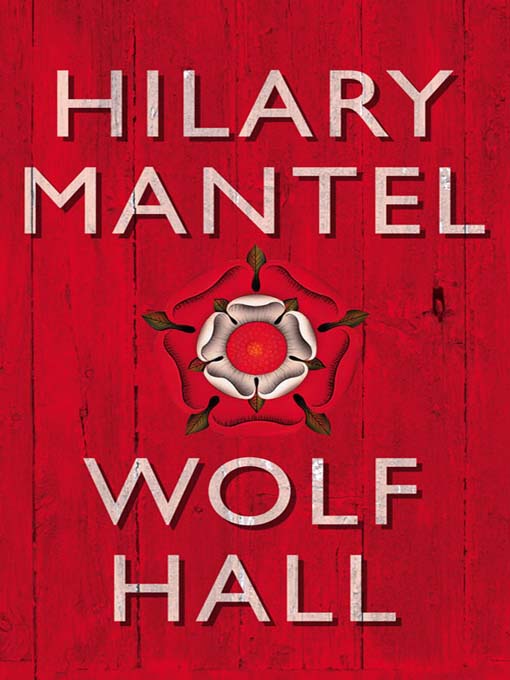
Hilary Mantel has given a wonderful voice to Thomas Cromwell in this novel of an eyewitness perspective on Henry VIII's split from the Church of Rome. All the usual suspects are present, Katherine of Aragon, Anne Boleyn, Cardinal Wolsey, Thomas More, along with a wonderful supporting cast of fully realized minor characters, whether fictional or historical. I don't know which is more painful to watch, Thomas More being viciously abusive to his wife and daughters over lunch, or Cromwell as a child watching a Lollard burned at the stake. Unless it's the progress of Henry's relationship with Anne.
What gives me the most writer envy is that Wolf Hall is written in third person present tense, which normally leaves me cold. This time I was so mesmerized after the first page that I barely noticed. A must read for anyone who loves good writing and/or this period in history.
# Permanent link to Wolf Hall
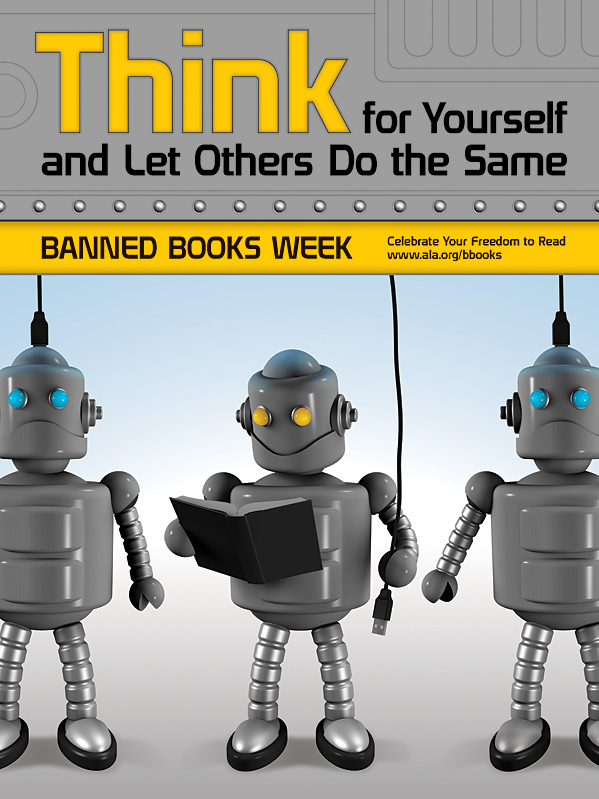
It's Banned Books Week, folks. Click on the link to find ideas and resources to spread the word.
Here are some of the reasons why.
Banned and Challenged Classics
4. To Kill a Mockingbird by Harper Lee
5. The Color Purple by Alice Walker
13. Charlotte's Web by E.B. White
33. The Call of the Wild by Jack London
40. The Lord of the Rings by J.R.R. Tolkien
56. Jazz by Toni Morrison
79. The Maltese Falcon by Dashiell Hammett
81. Wide Sargasso Sea by Jean Rhys
90. The Wind in the Willows by Kenneth Grahame
95. Kim by Rudyard KiplingSafe to say I wouldn't have made it through childhood without some of these books. Go here to read the full list.
Letting someone tell you what you can or can't read is downright unAmerican. There is an Amazon buy link beneath each title. Please do feel free to click on them to buy a copy.
# Permanent link to It’s Banned Books Week 2010!
I hope this is as close as I ever get to being shot at. This book is that real, that immediate. Junger follows the 173rd Airborne’s Battle Company into the Korengal Valley in Afghanistan, and next to the definition of Hell on Earth in the dictionary? That’s the Korengal Valley. The weather (“Summer grinds on: A hundred degrees every day and tarantulas invading the living quarters to get out of the heat.”) and the terrain (“The last stretch is an absurdly steep climb through the village of Babiyal that the men call “the Stairmaster.””) would have challenged Atilla the Hun, except that Atilla was smart enough not to invade Afghanistan.
As if the weather and the terrain aren’t bad enough, they’re also fighting the culture. “Most Korengalis have never left their village and have almost no understanding of the world beyond the mouth of the valley. That makes it a perfect place in which to base an insurgency dedicated to fighting outsiders. One old man in the valley thought the American soldiers were actually Russians who had simply stayed after the Soviet army pulled out in 1989.”How tough are these guys? “Battle Company is taking the most contact of the battalion, and the battalion is taking the most contact - by far - of any in the U.S. military. Nearly a fifth of the combat experienced by the 70,000 NATO troops in Afghanistan is being fought by the 150 men of Battle Company. Seventy percent of the bombs dropped in Afghanistan are dropped in and around the Korengal Valley.”
Good thing they’re tough, because everyone is shooting at them (“The bullet you dodge will pass you with a distinctive snap. That’s the sound of a small object breaking the sound barrier inches from your head.”). And that’s just when they’re staying “safe” (hah!) behind the wire of Restrepo, an outpost named for a medic who died in combat. “Restrepo was extremely well liked because he was brave under fire and absolutely committed to the men. If you got sick he would take your guard shift; if you were depressed he’d come to your hooch and play guitar.”
This is an on the ground, eyewitness account of men at war, today, this minute, our guys in Afghanistan at work. The prose is clear and sharp and while Junger is inevitably a part of the story, he doesn’t put himself forward too often and he never makes the mistake of thinking anything but the men of Battle Company are the subject.
The larger subject is, of course, war, and Junger does go there later in the book. Armies have a vested interest in figuring out what makes a man fight and fight well, and Junger cities a lot of studies and makes a praiseworthy attempt at explaining why men fight. Testosterone and other hardwired biological stimuli come into it, as you knew they would, but that’s not all there is to it. “The willingness to die for another person is a form of love that even religions fail to inspire, and the experience of it changes a person profoundly. What the Army sociologists, with their clipboards and their questions and their endless metanalyses, slowly came to understand was that courage was love.”
The men of Battle Company love combat, and this book is as close as most people will get to understanding that. “Civilians balk at recognizing that one of the most traumatic things about combat is having to give it up.”
But mostly? You come away from this book thinking, Okay, if it is biologically inevitable that young men are going to go to war? We should pick our fights with more care. These guys are too good to waste.
Junger and photographer Tim Hetherington filmed a documentary based on this same material, Restrepo. Already in my Netflix queue.
# Permanent link to I hope this is as close as I ever get to being shot at.
[youtube http://www.youtube.com/watch?v=zvUdruvbdmI&hl=en_US&fs=1]

Go here to read librarian Nancy Pearl's most recent feature on NPR talking about good books to read. She's so well-read and so articulate and so enthusiastic, my to-read pile gets longer just listening to her.
And you can follow her on Twitter.
And, glory of glories, she has a blog. And it's got an RSS feed. If, you know, you were into that kind of thing.
She even has her own action figure.
With Nancy on the case, there is absolutely no reason for anyone to be sitting around whining that they don't have anything to read. Yes, you do! Or you do if you listen to Nancy.
# Permanent link to Book lust. You know you’ve got it. So does Nancy Pearl.



"...the detective story...is particularly popular in times of unrest, anxiety and uncertainty, when society can be faced with problems which no money, political theories or good intentions seem able to solve or alleviate," she writes. "The classical detective story can work in any age provided murder is regarded as an act which necessitates the discovery of the perpetrator and the cleansing of society of its stain...I see the detective story becoming more firmly rooted in the reality and the uncertainties of the twenty-first century, while still providing that central certainty that even the most intractable problems will in the end be subject to reason."
# Permanent link to P.D. James on the Crime Fiction Case
This month sees the return of P.F. Chisholm's Sir Robert Carey series in the fifth novel, A Murder of Crows, and hooray for that! Here is the introduction I wrote for the second novel in the series, oh so long ago now...
The scene is the nebulous and ever-changing border between Scotland and England in 1592, the thirty-fourth year of the reign of Good Queen Bess, five years after the Spanish Armada, fifty-one years after Henry VIII beheaded his fifth queen. Reivers with a high disregard for the allegiance or for that matter the nationality of their victims roved freely back and forth across this border during this time, pillaging, plundering, assaulting and killing as they went.
Into this scene of mayhem and murder gallops Sir Robert Carey, the central figure (and real historical figure) of the mystery novels by P.F. Chisholm, including A Famine of Horses, A Season of Knives, A Surfeit of Guns and A Plague of Angels. Sir Robert is the Deputy Warden of the West March, and his duty is to enforce the peace on the Border. Since everyone on the English side is first cousin once removed to everyone on the Scottish side, it is frequently difficult to tell his men which way to shoot.
Sir Robert is as delightful a character as any who ever thrust and parried his way into the pages of a work of fiction, in this century or out of it. He is handsome, intelligent, charming, capable, as quick with a laugh as he is with a sword. He puts the buckle into swash. He puts the court into courtier; in fact, his nickname is the Courtier.
The ensemble surrounding him is equally engaging. There is Sergeant Henry Dodd, Sir Robert’s second-in-command, who does “his best to look honest but thick.” There is Lord Scrope, Sir Robert’s brother-in law and feckless superior, who sits “hunched like a heron in his carved chair.” There is Philadelphia, Sir Robert’s sister, “a pleasing small creature with black ringlets making ciphers on her white skin.” And there is the Lady Elizabeth Widdrington, Sir Robert’s love and the wife of another man, who is “hard put to it to keep her mind on her prayers: Philadelphia’s brother would keep marching into her thoughts.”
There is hand-to-hilt combat with villains rejoicing in names like Jock of the Peartree, and brushes with royalty in the appearance of King James of Scotland, who’s a little in love with Sir Robert himself. And who can blame him? Sir Robert is imminently lovable, and these four books are a rollicking, roistering revelation of a time long gone, recaptured for us in vivid and intense detail in this series.
The series in order:
A Famine of Horses
A Season of Knives
A Surfeit of Guns
A Plague of Angelsand this month
A Murder of Crows. I was lucky enough to score an ARC and I liked it so much I did a thing I hardly ever do, I blurbed it, thusly:
Sir Robert Carey is back at last in this fifth novel in PF Chisholm's Sir Robert Carey series, with the redoubtable Sergeant Henry Dodd matching wits with Sir Robert's mother, the darling and deadly Lady Hunsdon. Well worth the wait.
Chisholm Herself, aka Patricia Finney, will appear live! and in person! this weekend at the Poisoned Pen Conference in Scottsdale. I'll be there, too, checked in to the swanky Arizona Biltmore Hotel at the bargain basement conference price of $89 a night. Lots of fun will be had therein, including a panel on Georgette Heyer that no GH fan will want to miss. Come on down!
# Permanent link to PF Chisholm’s A Murder of Crows

As one rabid Georgette Heyer fan to another, I'm sure you'll agree that we can't go home again to Regency England often enough. Here's a couple of time machines set on one-way, non-stop...
Miss Sarah Tolerance elopes with her brother’s fencing instructor from Regency England to the continent, and when he dies returns home. Cast off by her family, she determines to make her way in the world without falling into prostitution, the usual fallback of the Fallen Woman, and instead sets herself up as an Agent of Inquiry. Setting, plot and especially character are all excellent in Point of Honor and Petty Treason by Madeleine E. Robins. Trust me, you will believe a woman can be a PI in England in 1810.
# Permanent link to Madeleine Robins and Naomi Novik
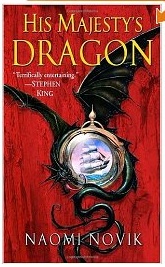
What if the Napoleonic Wars had been fought with dragons? That's Naomi Novik's thesis in Her Majesty’s Dragon and its four sequels, in which swashbuckling action mix seamlessly with serious themes like class conflict and slavery. My favorite in the series, Empire of Ivory, turns history on its head by providing Africa with a capable, charismatic leader determined to unite the continent against slavery. Imagine if that had happened in real life. Novik's 19th century British dialogue and mastery of nautical detail are absolutely convincing. A thumpin' good read. [Note: And as I post this I discover to my great joy the sixth in the series, Tongue of Serpents, comes out in July!]

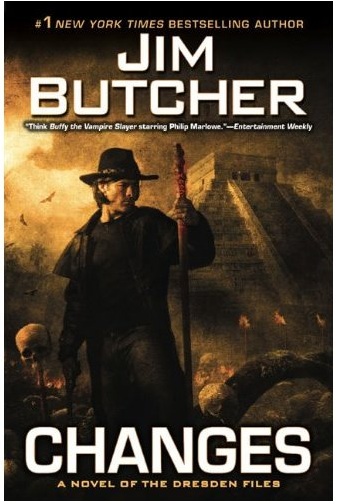
I didn't think Jim Butcher could write a better Harry Dresden book than Dead Beat. Boy, was I wrong.
Big. Fat. Spoiler. Alert. Don't read any more until you've read the book.
If I may speak of this from a personal perspective, I have done the same thing with the Kate Shugak series that Jim Butcher has now done in Changes. I took her job away, albeit off stage, I killed her lover, I burned down her house. But in Changes Butcher does it all in one book, in 438 pages he strips Harry to the bone, divesting him of every possession, including his own soul. And then on the last page, he kills him.Except the oncoming train tells me he hasn't. And also because I went hotfoot to his website to be reassured that Butcher is still saying there are twenty books in the series and this is only number 12.
My heart failed me too many times to mention, in steadily increasing palpitations. When Harry's office exploded, not so much, he hadn't been there in a while. When the Blue Beetle got squished beyond all hope of resurrection. When his house burned down and took his lab with it. When he broke his back. When he slaughtered the Winter Knight, I actually cried out "No, Harry, no!" What will Mab do to him? It's all very well for Ebenezer (Harry's grandfather! It all makes so much more sense now! Jesus, how far ahead does Butcher plot out these novels?) to say that Harry will always be able to choose, but Harry sold himself to Mab in exchange for healing and power, and he killed, deliberately, to get them. That's a bill I'm not sure he can pay.
When Butters got shot.
And then Harry kills Susan, the one woman he has ever loved, to save their daughter and put an end to the Red Court.
He gives Harry a daughter, and then he takes her away.
And then that horrible, wonderful bait-and-switch with Karrin at the end.
Wow.
There are so many great, great scenes, but let me just single out a few.
The Grey Council arriving in the nick of time, when we finally get to see Blackstaff at work. "I got another one."
Karrin with Fidelacchius.
The great rif on the Fellowship of the Ring. (I will say I knew Martin was the rift within the lute, he was too impervious to injury. I did not see coming what the soul gaze he exchanges with Harry at the end reveals. But of course it fits, perfectly.)
The best part of this book is that Butcher waited this long to write it, to give us 11 previous chapters in Harry's life, giving us that much lead time to become completely invested in his character. We feel every hit Harry takes like it's aimed at us personally.
Incredibly well done, and leaving the reader wondering how the hell Harry's going to come back from this, and if he'll still be our Harry when he does. What a great place to leave us. Bravo!!
# Permanent link to Jim Butcher’s Changes
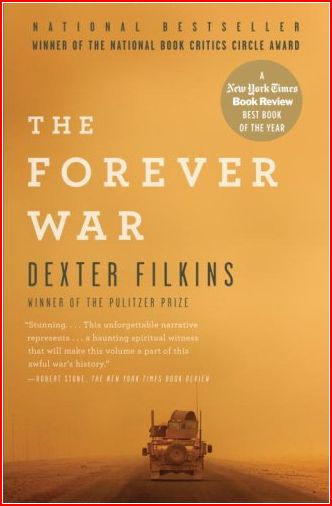
I’m not a soldier, I’m not a politician, so the best I can do when we go to war is read about it. Lately that’s been Charlie Wilson’s War by George Crile, The Dark Side by Jane Mayer, and The Forever War by Dexter Filkins.
Charlie Wilson’s War I can best describe as a tale of Robin Hood and his merry men, a bunch of Washington D.C. true believers who never got over the Vietnam War, robbing the federal government to give to what they called the Afghan freedom fighters virtually unlimited funds and war materiel to boot the Soviet’s invading army back across their own border. It is a very entertaining read, it’s well written and incredibly well researched, but reading now what happened then through the prism of current events, I’m left with a feeling of incredulity at the display of hubris on the part of Charlie and his merry men. I have also lost any faith I ever had in the oversight capability of Congress.
A much darker read is Jane Mayer’s The Dark Side, a painstaking and just amazingly detailed account of how extreme rendition (in English, kidnapping) and extreme interrogation (in English, torture) came to be public policy in the current administration. I can't say you'll enjoy reading this book, but it's a book that should be read, at the very least as a cautionary tale as to just how far things can go wrong when nobody's watching. It is reassuring to report that there are heroes, like David Brant, the head of NCIS, Alberto Mora, Counsel to the US Navy, the FBI agents who refused to have anything to do with the torture, and all those administration attorneys who, while they were hired because they had the correct conservative credentials nevertheless knew that kidnapping and torture are wrong, unconstitutional and unAmerican, and who fought the good fight against this program, some of them from the beginning, and some of whom were fired or forced to quit because of it.
# Permanent link to Charlie Wilson’s War
The Forever War was written by Dexter Filkins, a New York Times reporter who has been on the ground in Afghanistan and in Iraq from the beginning, and whose prose never once gets in the way of the story he tells. Listen to this: “Sometimes I would walk into the newsroom that we had set up in the New York Times bureau in Baghdad, and I’d find our Iraqi employees gathered round the television watching a torture video. You could buy them in the bazaars in Baghdad; they were left over from Saddam’s time.” This book is as close to Iraq as you can get without being shot at, and that's okay with me.