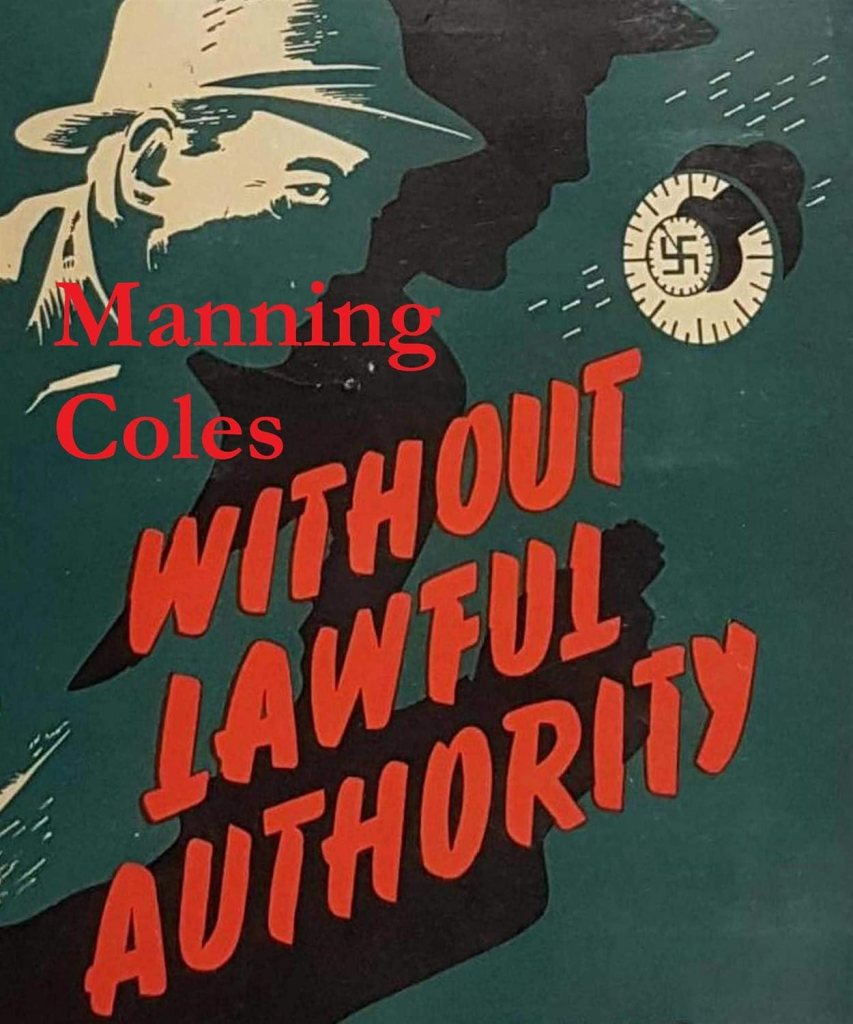
Six months after D-Day, Captain Billy Boyle, Eisenhower’s special agent, is in Paris laying a trap for a group of deserters called the Syndicat from everyone’s armies slash militias who are stealing everything that isn’t nailed down (which is most everything in the aftermath of the invasion and the liberation of France et al) and…
Of Martin Walker’s 17 Bruno novels, all of which I have thoroughly enjoyed (especially the scenes where Bruno cooks) this feels like the one that was written straight from the heart. The past is always very much present in these books, but here a secret grave revealing the raped and murdered corpses of two young…
This book feels like Gallagher is busy trying to fill in all the blank spots left by those male historians when they ignored the other half of the race. Like when 1849’s Luzena Stanley Wilson’s husband dumps her and their four children in Sacramento and she moves to the felicitously named Coyote Droppings on the…
I was in El Malpais National Monument recently and posted a link on my Facebook page. Someone left a comment that this book was set in El Malpais and it was only $3 on Kindle so… As most Western writers are L’Amour is enamored of the landscape (me, too) and it looks just as he…
There is something about the landscape of the American Southwest that seduces writers into superlatives. I’m thinking of Zane Grey and Louis L’Amour and Wallace Stegner and, yes, Willa Cather, as here in what I can only describe as a travelogue disguised as a fictionalized version of the life of Archbishop Jean-Baptiste Lamy of Santa…
I’ve seen María and Julián Martinez’s pottery in museums and galleries all over the Southwest and never knew what I was admiring or who invented it. Now I do. But that isn’t what’s important about this book. I have never read an as-told-to narrative where the ghostwriter or in this case ethnographer managed to so…
If Richard Rhodes’ The Making of the Atomic Bomb is the story of the making of the first atomic bomb from the scientist’s viewpoint (mostly), Jennet Conant’s 109 East Palace is that story told from the viewpoint of the support staff and families of those scientists (mostly). It is principally the story of Dorothy McKibben, a Santa Fe widow…
A delightful, witty, albeit somewhat starry-eyed read set in England but mostly Italy a few years after World War I. Lotty Wilkins and Rose Arbuthnot, suffering in equal parts from unsatisfactory marriages and the English weather respond to an advertisement offering a castle on the Italian Riviera. They take it for the month of April…
A long extended farce, featuring the sort-of dynamic duo Warnford and Marden. Warnford has been cashiered from the British Army for important documents going missing on his watch, and Marden robs safes for a living (relax, only from those who can afford it). Marden fails to rob Warnford's safe and a beautiful friendship is instantly born, which segues immediately into the both of them going up against Hitler's finest in the UK in the year before the war. Disgraced officer and cat burglar they may be, they aren't unpatriotic.
Did you know the last shot fired in the Civil War was fired in the Aleutians? You would if you’d read Confederate Raider by Murray Morgan, a book about the Confederate raiding ship Shenandoah, built and commissioned to disrupt if not destroy the Union’s whaling industry in the North Pacific. Built in England, armed in the Madeira Islands, the Shenandoah travels around the Cape of Good Hope and starts sinking Yankee whaling ships from the south Atlantic on. But unbeknownst to them, the war ended in the middle of their search and destroy cruise. When they discover this they are afraid to surrender to a Union ship for fear they will be sunk out of hand, so successful has been their mission, so in an extraordinary feat of seamanship they sail south, dodging irritated Union vessels all the way, round Cape Horn and surrender to the British back in the UK, completing the journey without suffering a scratch. One of the great sea stories.
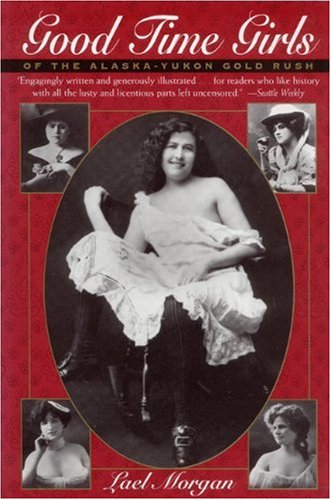
If you’re interested in the Gold Rush there is no better book on the topic than Pierre Berton's The Klondike Fever, but I also love Good-time Girls by Lael Morgan. This history of the women who came north with the stampeders to mine the minors in saloons, dancehalls and hookshops from Dawson to Nome to Cordova is filled with anecdotes of those days when an attractive woman was literally worth her weight in gold. French Marie, the Oregon Mare, Black Mary, Klondike Kate and more, Lael’s affection and respect for these women, whom she regards as pioneers, rises up from every page of this book. And wait till you find out who the Sterling Highway was named for. I think of him everytime I drive to Anchorage.
The Thousand-Mile War by Brian Garfield is a page-turner set in the Aleutians during World War II. Six months after Pearl Harbor the Japanese took the islands of Attu and Kiska, catching the United States by surprise for the second time in six months and putting Alaska and the west coast seriously at risk from invasion. (If you are geographically challenged and this makes no sense to you, see the Great Circle Route.) America scrambled to respond, and for fifteen months the two nations slugged it out in ice and snow and fog. In the end, the Aleutian Campaign tied up a sixth of the Imperial Japanese Air Force and 41,000 ground troops, forces which McArthur and Halsey did not have to fight further south. Complete with maps, illustrations and notes. Garfield was a crime fiction writer, which may account for the lively prose. This is not a tale that will put you to sleep.
Many Battles by Ernest Gruening is a personal narrative written by one of Alaska’s territorial governors and later a US Senator, one of two to vote against the Tonkin Gulf Resolution. A practicing politician, Gruening still grinds less of a personal ax than most, and he’s a good writer. His eyewitness account of Elizabeth Peratrovich’s speech before the territorial legislature in 1948 on the subject of Native suffrage will give you goose bumps. For that reason alone it stays on my bookshelf and I pull it down ever year or so to reread that scene. Sometimes we get things right.