
See you Saturday at the Poisoned Pen!
And if you can’t come in person remember you can watch on Facebook Live or YouTube. They will ship your book right to you, because they are nice like that.
*Order your signed first edition here.
*Order your Kindle US edition here.
*Order your Kindle UK edition here.
Probably my favorite place I’ve ever traveled to is Turkey. Provence is a close second, but Turkey was the crossroads of continents for thousands of years and every civilization left its footprint for us to see and marvel at thousands of years later.
Especially Rome. Rome famously build roads connecting the farthest reaches of their empire. I’ve walked, hiked, and driven on roads whose foundations the Romans built from Turkey to Egypt to Italy to France to England.
They also built aqueducts, bringing water not only to Rome but to the places they conquered, too. I’ve visited the Pont du Gard, a work of history and art in one, in Provence three times and will do so again in May. The first time I went I could drive over it. Last time, it had been declared a World Heritage Site, the road over the bottom tier is gone, and you walk in from the parking lot. Fine by me.

On my trip to Turkey, we had a guide named Serra who really got us and what we were interested in. On the road between Antolya and Fethiye she suddenly swerved off the highway onto a narrow dirt road headed south. This wasn’t on the itinerary. “Where we going?” I said. She smiled a mysterious Turkish smile and said, “You’ll see.”
We sure did.


It was a twenty-kilometer long remnant of an old Roman aqueduct. The whole thing was forty kilometers long but the other twenty were buried in the mountain between this end and the village it was carrying water to.


The center image is a section of the pipe, which top left you can see laid end to end on top of the rock bridge. There are two holes, one for the water and the one on the top so some poor slave could reach in with a stick and scrape off the calcium deposits that over time obstructed the flow.
There was no one there but us. We climbed all over it and around it and tried to imagine the Roman engineer who designed it and the slave labor that built it and the people at the end of the pipeline who drank the water it carried to them and washed in it and cooked with it and flushed their sewage with it. The image below was the view from the top. Yes, that’s the Mediterranean, and we watched that boat up anchor from that cove and sail away. If we hadn’t heard the engine, it could have been “a quinquireme of Nineveh from distant Ophir/Rowing home to haven in sunny Palestine.”

In Abduction of a Slave we are privileged to see Cleopatra at work, reading and acting on petitions from citizens all over her realm. One wants funds to build an aqueduct. We’ll watch over Tetisheri’s shoulder how Cleopatra responds.


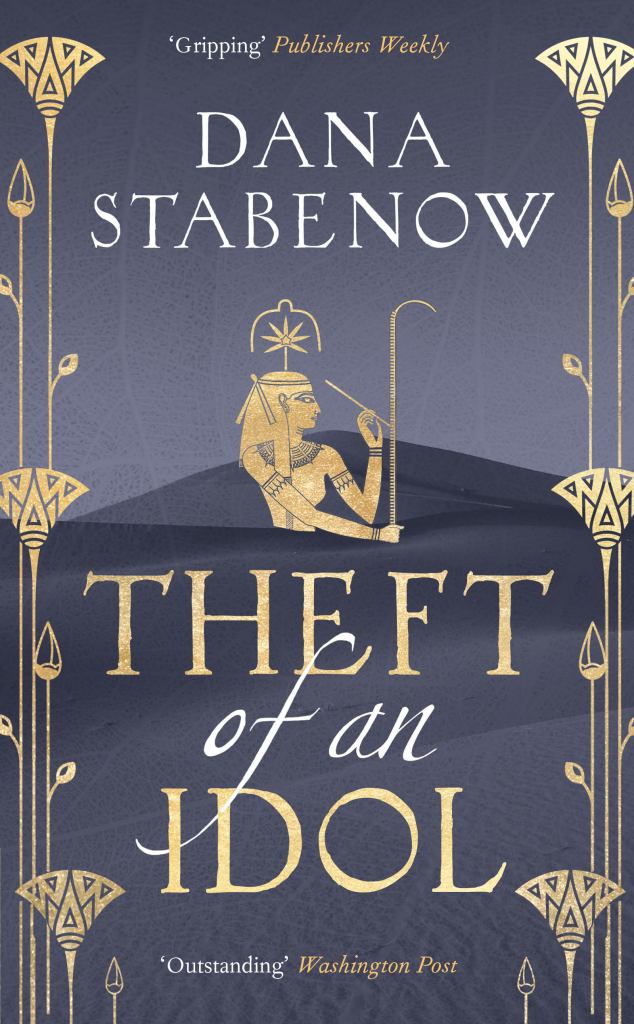
To catch you up, here are recaps of the first three Eye of Isis Novels:
Death of an Eye introduces us to Tetisheri, lifelong friend of Cleopatra, the Lady of Two Lands and ruler of Egypt. The queen’s Eye is struck down in the streets of Alexandria and Cleopatra tasks her friend to find the murderer and bring them to justice.
Disappearance of a Scribe Tetisheri’s first official case as the new Eye of Isis. A scribe goes missing and leads to an investigation of corruption, bribery, and murder in Alexandria’s building trades.
Theft of an Idol The most popular actor in Alexandria is kidnapped and the queen asks Tetisheri to find her and return her to her adoring fans. The journey takes Tetisheri and the Five Soldiers to Memphis, deep into the depravity and degradation of the eldest temple and even deeper into the heart of the tombs of the dead.
Chatter Eye of Isis Abduction of a Slave Ancient Rome Battle of Thapsus Eye of Isis 4