Being a sometime dive down the rabbit hole of the craft and business of writing.

This post by Damon Linker, Lament for the Declining Art of Editing, recently popped up in my feed, as random animadversions so often do in this Internet age. So okay, some guy whining about Taylor Swift, what else is new, and I haven’t heard the new album so I have no idea if I agree with him or not. (Probably not. Just a guess.)
But some of what Linker is saying is very pertinent for writers, and publishing as a whole as well. This passage in particular jumped out at me:
In writing this post, for example, I decided to limit myself to a few contemporary examples (Swift, The National, and Sheeran) and a few contrasting examples from the past (Dylan and Springsteen). I also decided to focus exclusively on music when I might have brought in many more examples from other genres—like the proliferation of overly long, undisciplined 3-hour Hollywood films; flabby, overwritten novels and biographies; and self-indulgent TV series filled with red herrings, extraneous characters, and unresolved plot points. But I thought readers would be better off making those kinds of connections on their own rather than piling up too many examples from too many forms of popular art that might lead the post to become repetitive, boring, or self-indulgent. I know music best, so that would be the genre I’d write about to make a broader point about the importance of editing and its waning place in our culture.
“Flabby, overwritten novels.” The phrase only stings because it’s true.
I would add that publishing deadlines today are far more, well, deadly to the writer, as in once a novel is on contract it has to be in on time or lose its publication day. Anyone who reads for recreation can spot books that have been rushed to print before their time. You can say that the writer shouldn’t submit a book that isn’t ready, but there is always pressure from publishers who want to fill the holes in their schedule, and let us not forget the writers themselves, who want to eat and pay the rent. The overriding impulse is often just to get that sucker out the door and watch your bank account for the check to drop.
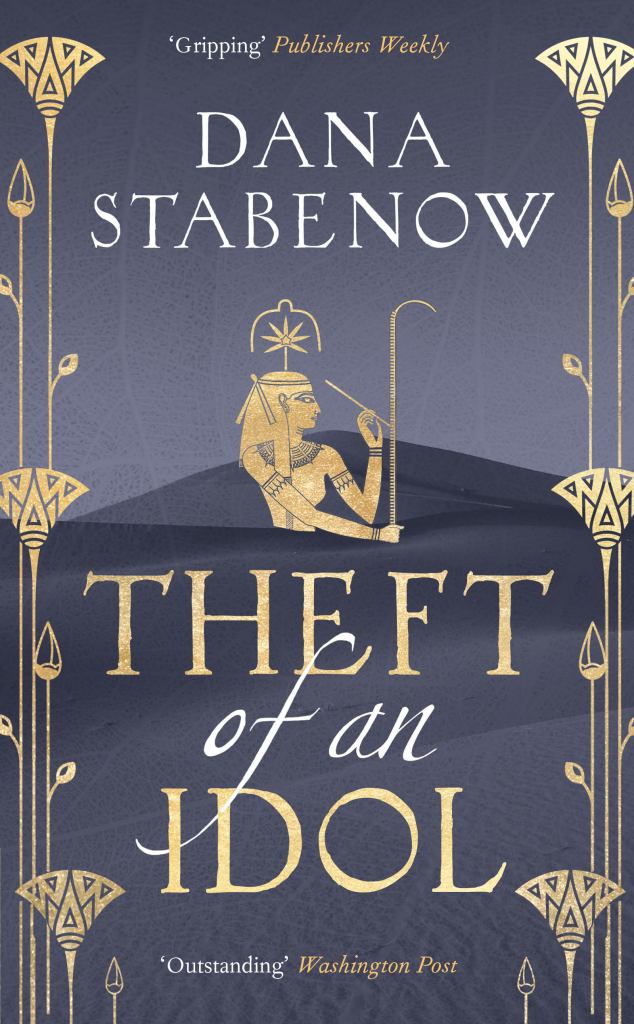
Nevertheless. As I have said ad nauseum to any aspiring writer who foolishly asks my advice, “Rewriting is your friend.” Waiting before you send in the manuscript helps, whether you do it deliberately or not. I recently finished Abduction of a Slave, the fourth Eye of Isis novel (get the first here) and then had to wait a week to send it on to my beta reader because her life went kerflooey. A day (or night) did not pass during that week when I didn’t think of some tweak to make a line of dialogue more interesting, to make a character more vivid on the page, to plug some plot hole (my Achilles heel).
Linker’s not wrong about the waning influence of editing, at least in publishing. There is an over-reliance, too, on the spelling and grammar checking functions in word processing programs. Arthur Lyons, author of the Jacob Asch series, once sent Jacob on a book-long pursuit of a stolen Hittite horde.


4 Comments Leave a comment ›
I’ve been wondering if there are any real editors left out there. It seems I see more & more books where a mistake should have been caught by someone! Isn’t this the editor’s job?!? Unfortunately I can’t think of any specific one right now.
Incidentally you made an editing error in the first sentence of the paragraph beginning, “Nevertheless…” (I’m sure you did this on purpose.)
[laughing] No, that’s a period, full stop, on purpose. Used to get the reader’s attention and to at least in part negate what I said in the previous paragraph.
Since international conglomerates took over all the publishing houses and they changed my royalty statements to read “Units sold” instead of “Books sold,” it’s been primarily about the numbers and not about quality control. Although there are still many good people working in publishing who are doing their damndest to keep standards from being flushed forever down the toilet.
Oh, lord, the lack of editing. The most recent example I came across was a minor recurring character in a murder mystery series, described as “clean-shaven,” among other attributes.
Only problem was this character is female.
Seems to me that originally the author had a male character here, switched it to a woman, but didn’t change the description, and no one along the line picked up on it.
Aaaaiiiieeeeee…