[a reprint of Nancy Pearl's piece on March 19, 2010. Italics are mine.]
Good Books for Reading Groups
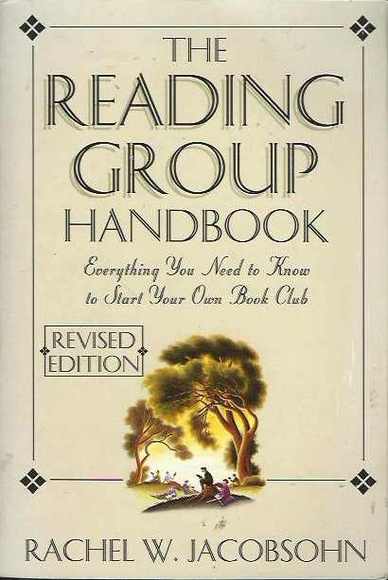
One of the questions I am frequently asked is about what I think makes a good book for discussion. There are, of course, lots of worthwhile books that discuss this very issue and offer suggestions—including Rachel Jacobsohn’s The Reading Group Handbook: Everything You Need to Know to Start Your Own Book Club and Good Books Lately: The One-Stop Resource for Book Groups and Other Greedy Readers by Ellen Moore and Kira Stevens for two. (And the librarian at your local library can help you find others.)
When choosing a book for a discussion, it’s important to realize that there’s quite often a difference between a book that’s enjoyable to read and one that makes for a good discussion. The latter should be a book with enough substance to warrant a discussion longer than 5 or 10 minutes. Many people have told me that they think every book is “discussable,” and maybe that’s true to a certain extent. But if I’m devoting 45 minutes or more to talking about a book, I want there to be something to say about it beyond “I really enjoyed it” or “I hated the main character” or “I didn’t like that the author never used quotation marks for dialogue.” I want a discussion that helps me understand what the author’s intent might be, why the characters made the decisions they did, and what the significance of the title is to the book, to name just a few topics a group might consider.
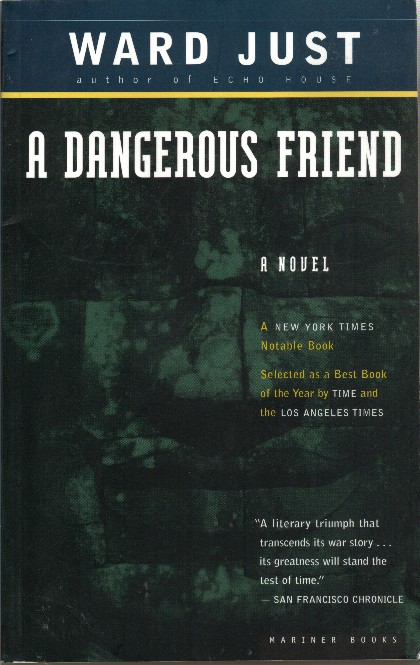
I think the book’s discussablity is much more important than whether people liked or didn’t like the book. When I’m leading a group, my last question is always, “So what did you think of the book?” You’d be surprised at how many people will talk about how their feelings about the book changed because of the discussion. Or how people will say that they didn’t finish the book but now plan to do so, all because of how people talked about it, or what they said. Too often, we tend to start book discussions by asking whether or not people liked the book, but that’s a dead-end question. And, in addition, it polarizes the group so that every further statement is prefaced by “I liked it and” or “I hated it but.” I always start off every discussion I lead by asking what the title has to do with the book. Sometimes it’s the only question I need to ask—we’re off into a great discussion for the next forty-five minutes or so. That happened both with A Dangerous Friend by Ward Just and Ernest Gaines’ A Lesson Before Dying.

There are some qualities to look for when you’re choosing a book for your group. When we’re discussing a book, we’re really talking about everything that the author hasn’t said—all that white space between the lines. If the author tells you everything, there’s not a lot to speculate about. Discussing books that are plot driven often leads nowhere, while books that are character driven frequently yield up thought provoking questions and answers. And the most discussion worthy character driven books are those in which the character has to make a decision that will change the course of his or her life. A good example of this is Ann Packer’s The Drive from Clausen’s Pier.
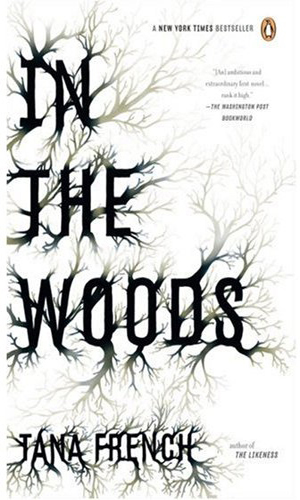
Another thing you might look for are books with ambiguous endings. (Be warned, though, that this is going to really rile readers who want their stories tied up neatly. But remember also, that the best discussions arise when some of the members enjoyed the book and others didn’t. It’s too boring if everyone liked it!) Try Tim O’Brien’s In the Lake of the Woods or Tana French’s In the Woods to get a feel for these kind of books.
Some books just beg to be talked about, including the Gaines, O’Brien, and Just novels. Here are others: Elizabeth Strout’s Olive Kitteridge; Lionel Shriver’s We Have to Talk About Kevin; Chinua Achebe’s Things Fall Apart; and Wallace Stegner’s Angle of Repose, for just a few examples. One of the things that makes these books so good is also what will turn some readers off: they’re not light reading. They deal with big issues—death, family, politics, history, and love—but all offer them up to readers in different ways. Just as Tolstoy said in the first line of Anna Karenina, “Happy families are all alike; every unhappy family is unhappy in its own way.” Light or happy fiction tends to be all alike. It’s in the deeper, perhaps more uncomfortable, novels that we will find the best works for discussions.
But “deep” or “serious” fiction doesn’t mean the book is impenetrable. All the books I mentioned above are pretty hard to put down because you become so interested in the characters (although you may not like them).
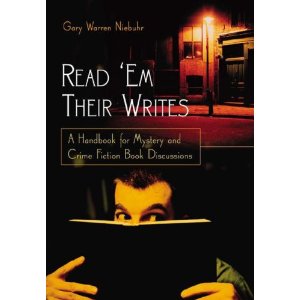
People often ask me to recommend a mystery for discussion. There’s a great resource for this, by librarian Gary Warren Niebuhr, called Read ‘Em Their Writes: A Handbook for Mystery Book Discussions. But if you’re choosing a mystery, I’d suggest selecting a book by an author who has created three-dimensional, interesting characters who move the plot, rather than having characters that are more-or-less ciphers and are there simply to make the plot move along at a good clip. It’s the difference between trying to discuss an Agatha Christie mystery (what is there to say, really, other than what page you were on when you figured out who the murderer was?) and an Elizabeth George mystery, like For the Sake of Elena, in which all sorts of issues are laid out for possible discussion. Another good mystery for discussion is Monkeewrench by P. J. Tracy.
In my books, Book Lust and More Book Lust, I made it a point to mention when a particular book, including both fiction and nonfiction, would be good for discussion, so you might want to check those out, as well.
And Dana sez, if you're looking for Christmas gifts for family and friends, remember, the book is the gift that keeps on giving.

# Permanent link to Good Books for Reading Groups